Heavy-duty industrial laundry machinery · United Kingdom

The cheapest kilo of water
is the one you never evaporate.

Every other machine in your plant takes water out by heating it. Our press takes it out by squeezing it, at 50 bar.

~60%moisture out of the tunnel
~35%moisture out of the press
50 barhydraulic membrane
40years · machines running in Italy and Europe
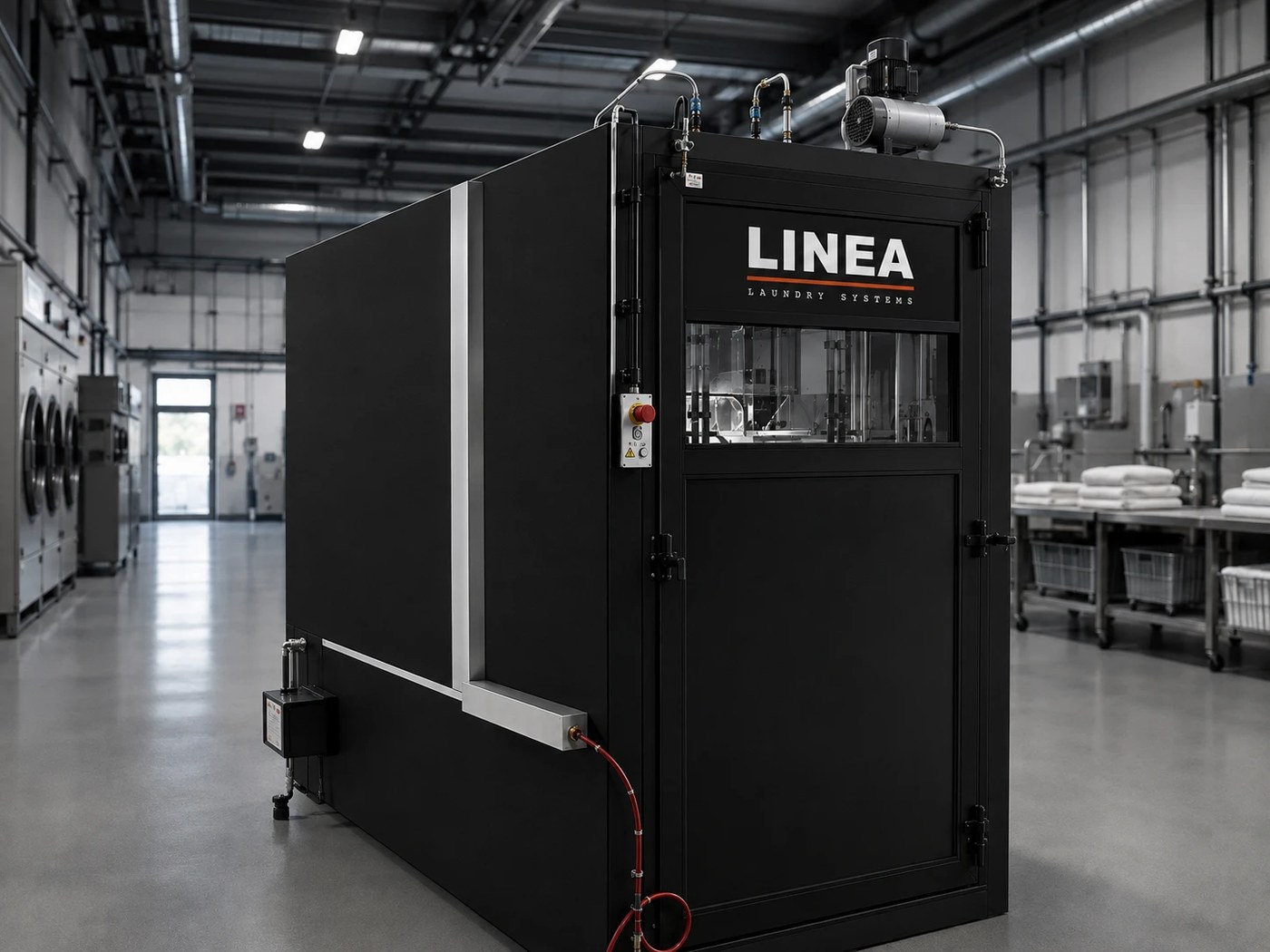
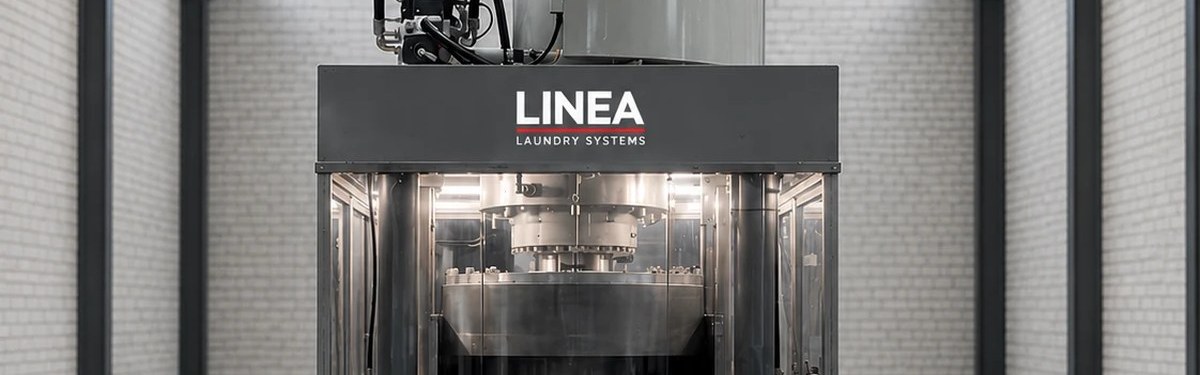
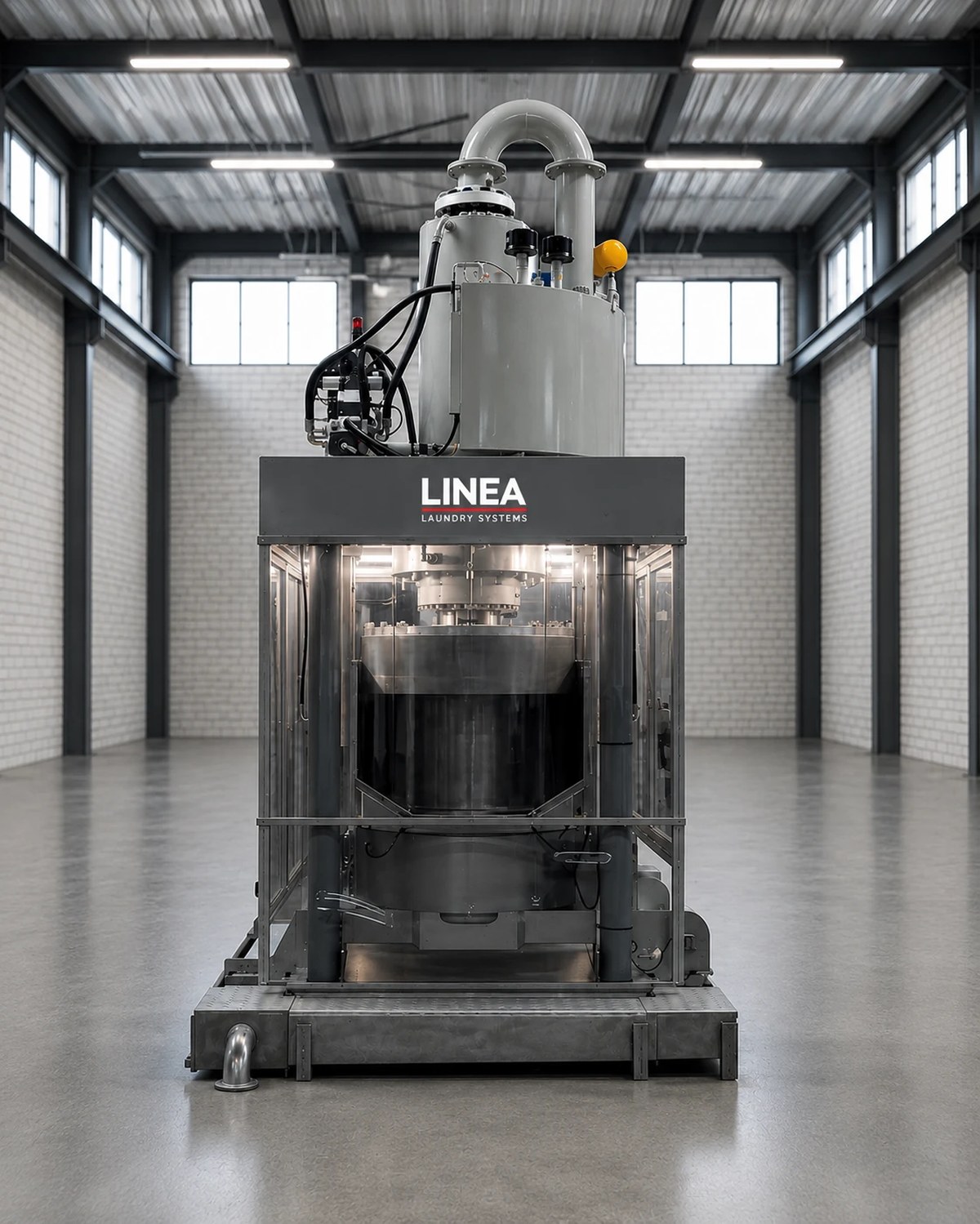
MAMMUT membrane extraction press

The problem nobody names

Standard machines need standard buildings.

Most UK laundries are not standard. They sit in buildings that were extended twice, with a low bay at one end, a column in the wrong place and a doorway that decides everything.

When the machine is fixed and the building is not, you pay for the difference: civil works, lost floor space, a layout that fights your flow for the next twenty years.

We size the machine to the building. Load height, discharge side, module count, footprint. Because we cut the steel, write the software and build the panel ourselves, changing a dimension is an engineering decision, not a special order.

MAMMUT · the press

Water leaves at 50 bar,
not at 180 degrees.

Every other machine on your floor removes water by heating it. The press removes it by squeezing it. That is the whole argument, and it is the reason we build this one first.

Out of the tunnel ~60% residual moisture
→
Out of the press ~35% residual moisture

Manufacturer data, MAMMUT TURBO 5.0 at 50 bar.

Put your own numbers in.

Heat you stop buying, every year £0
0kWh not burned
0tonnes of water not boiled

Based on 60% to 35% residual moisture (manufacturer data, MAMMUT TURBO 5.0 at 50 bar) and 0.63 kWh to evaporate one kilo of water, which is the latent heat of vaporisation of water. It counts no burner, drum or exhaust losses, so the figure you get here is the floor, not the ceiling.

The water squeezed out goes back into the tunnel, still warm. So you also stop paying to heat it twice.

40 / 50 barHydraulic membrane, full-cake pressure
Water recoveryReturned warm to the tunnel
Shorter dryingLess time in the dryer, less thermal stress on the textile
RetrofitCan go in ahead of dryers you already own
MAMMUT membrane extraction press
MAMMUT / MAMMUT TURBO 5.0 — membrane extraction press

The machinery

Full plant, one engineering language

From soiled sorting to stacked, wrapped linen. Pick what you need and we will quote that; pick the line and we will engineer the whole flow.

01

Washing & extraction

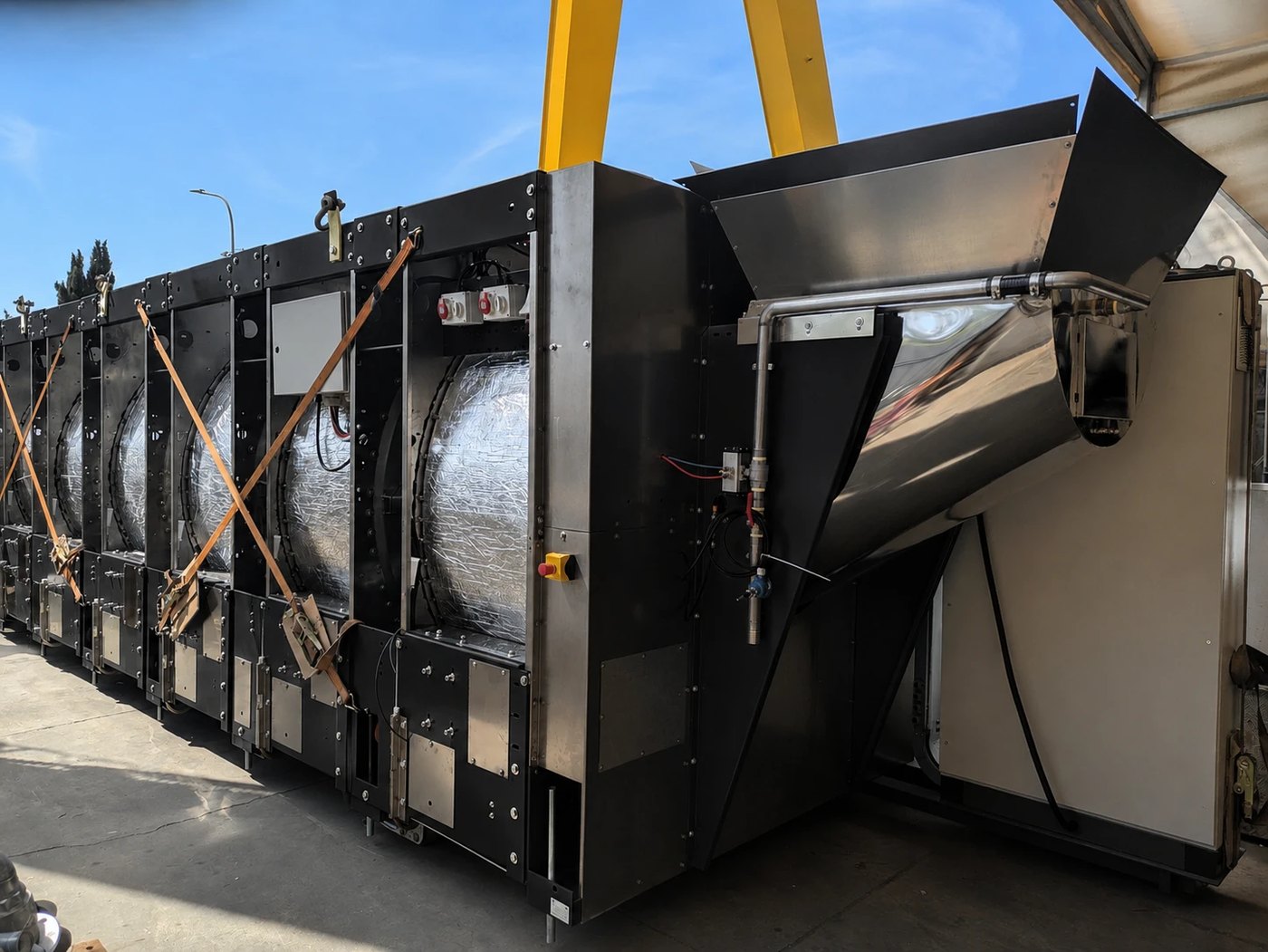
POSEIDON continuous tunnel washer lifted by gantry crane during build

POSEIDON

Continuous tunnel washer

Modular static-bath tunnel with top-loading transfer and a water-recovery system driven by software we write ourselves. Chambers from 50 kg, with the module count specified to your daily tonnage, and an automated loader available to feed soiled batches into the first chamber. Around 50 kg of washed linen leaves the tunnel every two minutes.

  • chambers from 50 kg
  • ~50 kg every 2 minutes
  • proprietary water recovery
Full page →
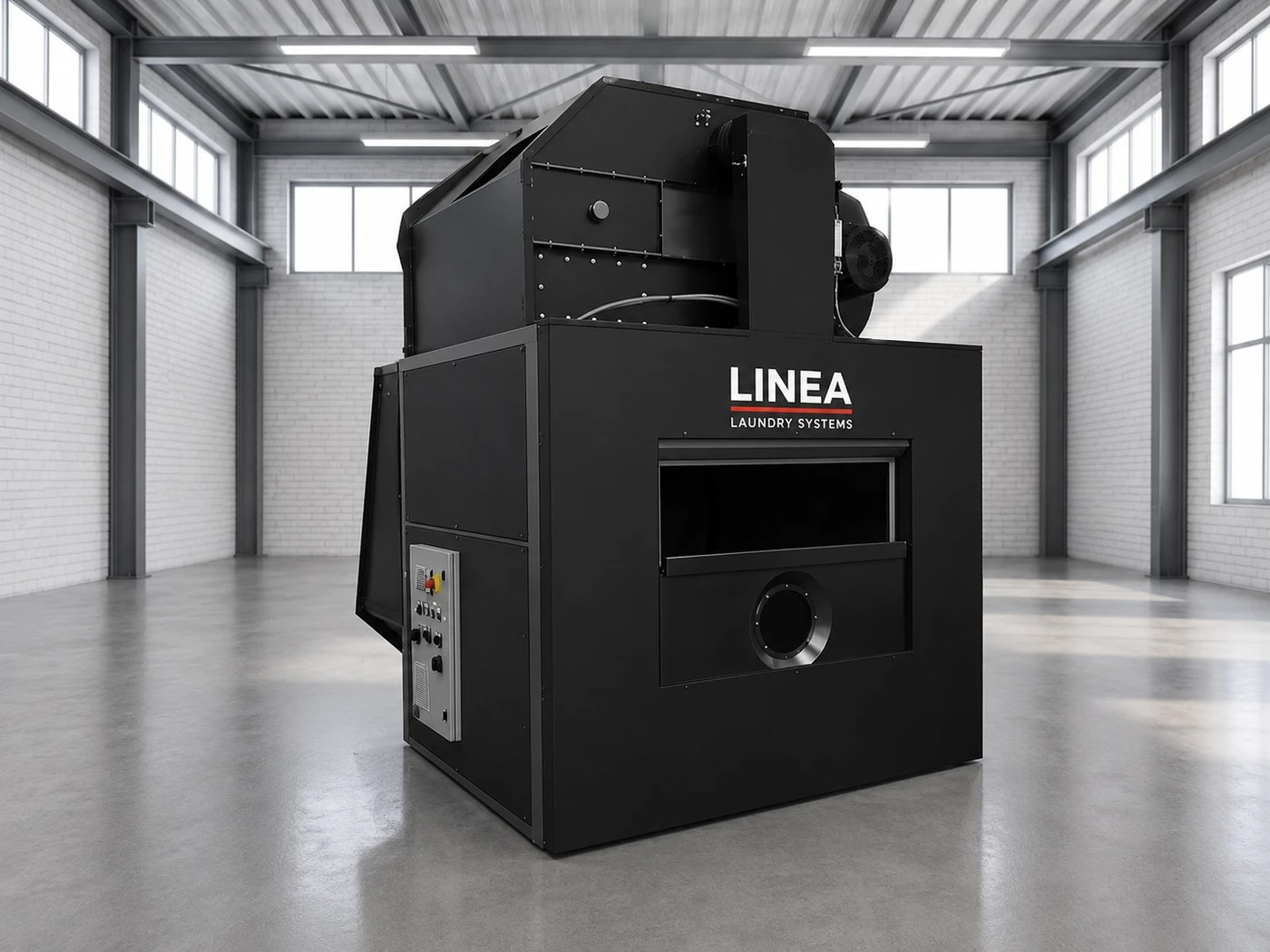
MAMMUT membrane extraction press

MAMMUT / MAMMUT TURBO 5.0

Membrane extraction press

Hydraulic membrane press at 40 or 50 bar, taking residual moisture down from around 60% to 35% and recovering water back into the tunnel. Every kilo of water squeezed out here is a kilo you don't pay to evaporate.

  • 40 / 50 bar
  • 60% → 35% residual moisture
  • water recovery to tunnel
Full page →
STERILWASH trolley washing and sanitising cabinet

STERILWASH

Trolley wash & sanitising

Washes and sanitises roll cages up to 90×90×180 cm, around three trolleys per 10–15 minute cycle. The part of hygiene compliance that everybody forgets until the audit.

  • up to 90×90×180 cm
  • ~3 trolleys / cycle
  • 10–15 min cycle
02

Drying & ironing

Ironer chest

STIRON

Flatwork ironer

Rigid fixed-chest ironer heated by closed-circuit diathermic oil, fired on natural gas, diesel or LPG. Even heat transfer across the full width, PLC touchscreen, talking to the feeders upstream and the folders downstream.

  • rigid fixed chest
  • diathermic oil, closed circuit
  • gas / diesel / LPG
Full page →
Industrial rotary dryer with optical pyrometer control

TORNADO

Industrial drying with optical pyrometer

Pass-through rotary dryers in 50 and 100 kg sizes, fired on steam or gas with a modulating burner and high-density insulation. The optical pyrometer reads the temperature off the linen itself, so the cycle ends when the linen is dry, not when a timer says so.

  • 50 / 100 kg
  • steam or gas, modulating burner
  • optical pyrometer control
Full page →
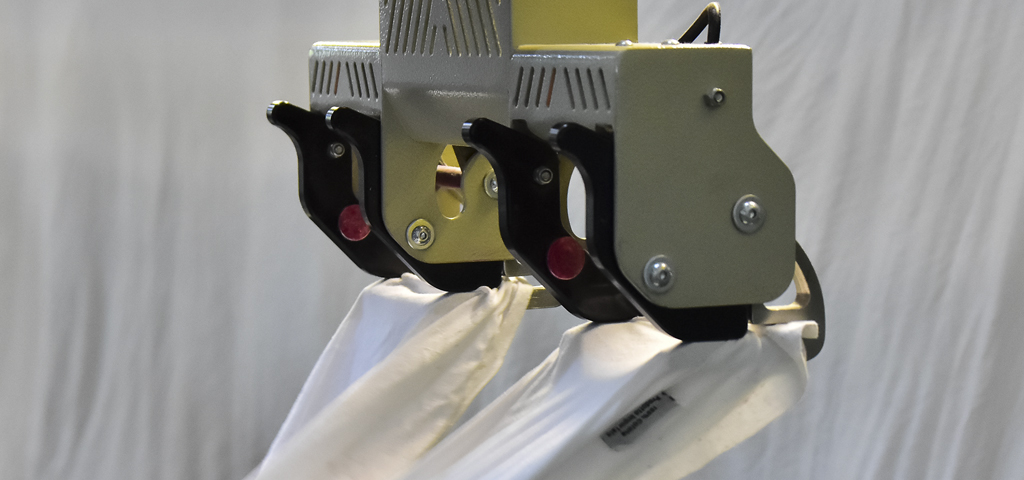
Automatic clamp feeder stations gripping linen

EAGLE · INTRUDER · HORNET

Feeding line

HORNET separates the pieces coming off the dryers, INTRUDER is the semi-automatic universal feeder with twin suction in a compact frame, and EAGLE is the automatic clamp feeder with up to four stations and Cotton Care anti-tear protection.

  • up to 4 clamp stations
  • Cotton Care anti-tear
  • compact twin-suction option
03

Folding & stacking

RAPTOR UP flatwork folder on test in the factory

RAPTOR · UP · UP 2 · FOX

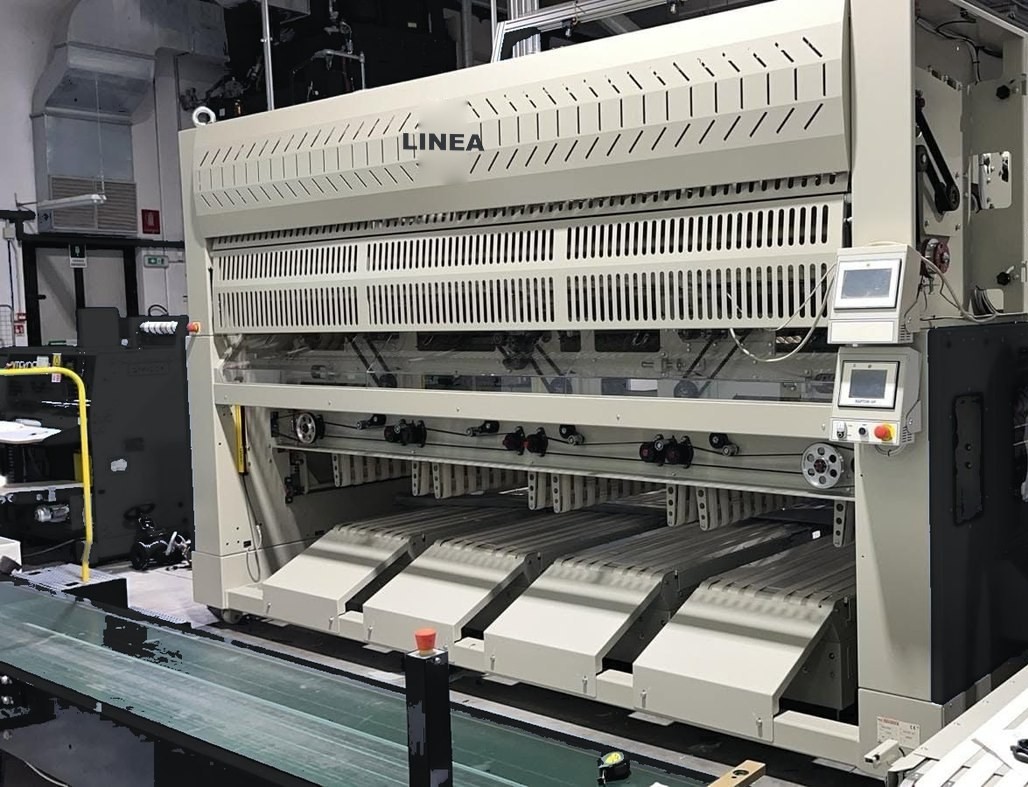
Flatwork folder

Up to three longitudinal folds by air jet on counter-rotating rollers, cross folds by belt reversal, at 60 metres a minute. Houses up to four stackers in one frame, so single, double, queen and king run together without four machines' worth of floor.

  • 60 m/min
  • up to 4 integrated stackers
  • auto-centring (FOX)
Full page →
APACHE automatic towel folder

APACHE · APACHE AIR

Towel folding

Automatic format recognition across three or four sizes, with blade or air-jet side profiling to keep the edges clean and the creases out. Built for the volumes hospitality throws at a towel line.

  • 3–4 formats auto-recognised
  • blade or air profiling
Full page →
KYLVEL small-piece folding and stacking machine

KYLVEL ELECTRIC / PLUS · WING · FALCON

Small-piece folding & stacking

Independent electric paddles taking table linen and small pieces to 1,200 items an hour, finished off by WING stackers and FALCON auto-centring units.

  • up to 1,200 pcs/hour
  • independent electric paddles
Full page →
04

Automation & logistics

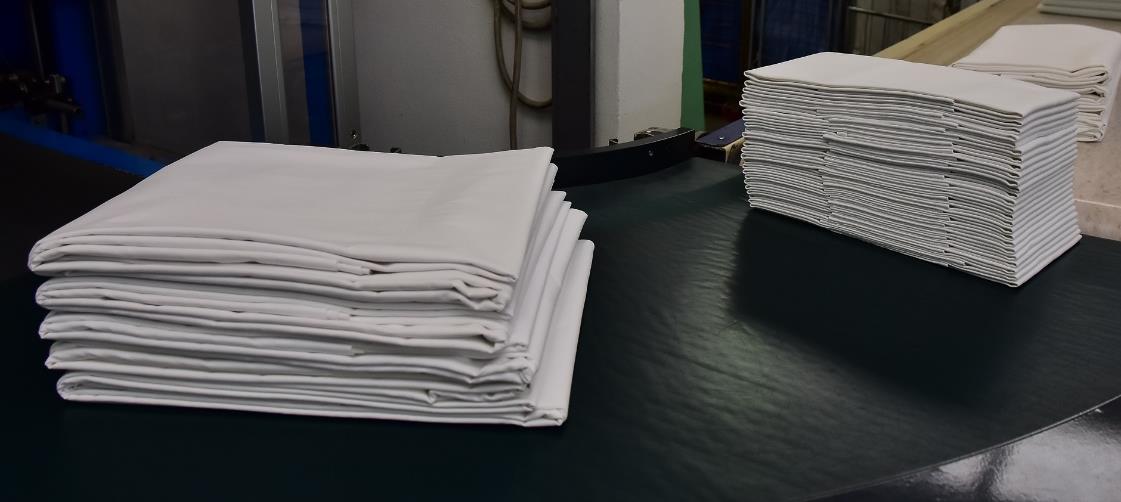
Folded linen stacked at the end of the finishing line

MOVE SYSTEM

The bottleneck is no longer the wash

Any serious tunnel will process the tonnage. What actually caps your output is what happens between machines: cakes queueing after the press, dryers waiting, the ironer starved while the folder sits idle.

MOVE SYSTEM is the plumbing between the machines: overhead rail and bag loading for soiled and clean, a mechanised PIZZE buffer store downstream of the presses, transfer cars on cross rails feeding the dryers dynamically, and ball conveyors for low-friction multi-directional sortation. It decouples the wash floor from the drying floor so neither waits for the other.

  • overhead rail / bag loading
  • mechanised cake buffer
  • transfer cars
  • ball conveyors

On the floor

Lines that are already running.

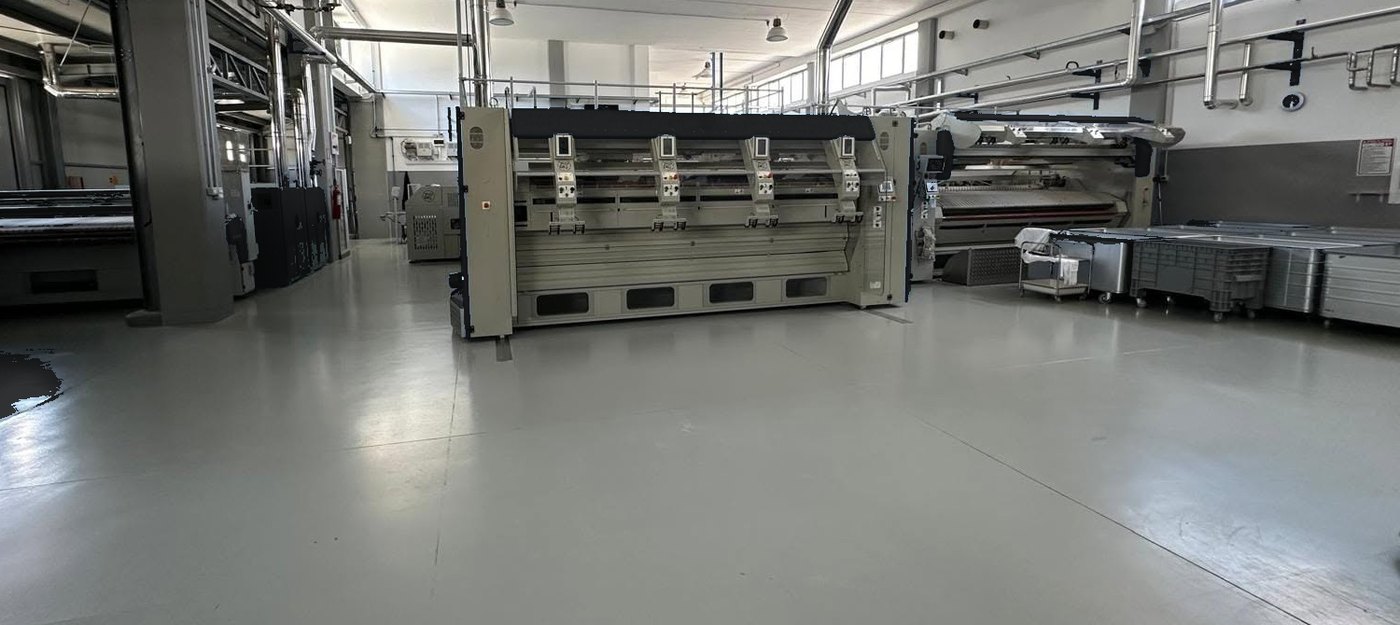
Feeding stations and flatwork ironer installed and running in a laundry
Four feeding stations into the ironer, folding and stacking downstream. One control language across the line.
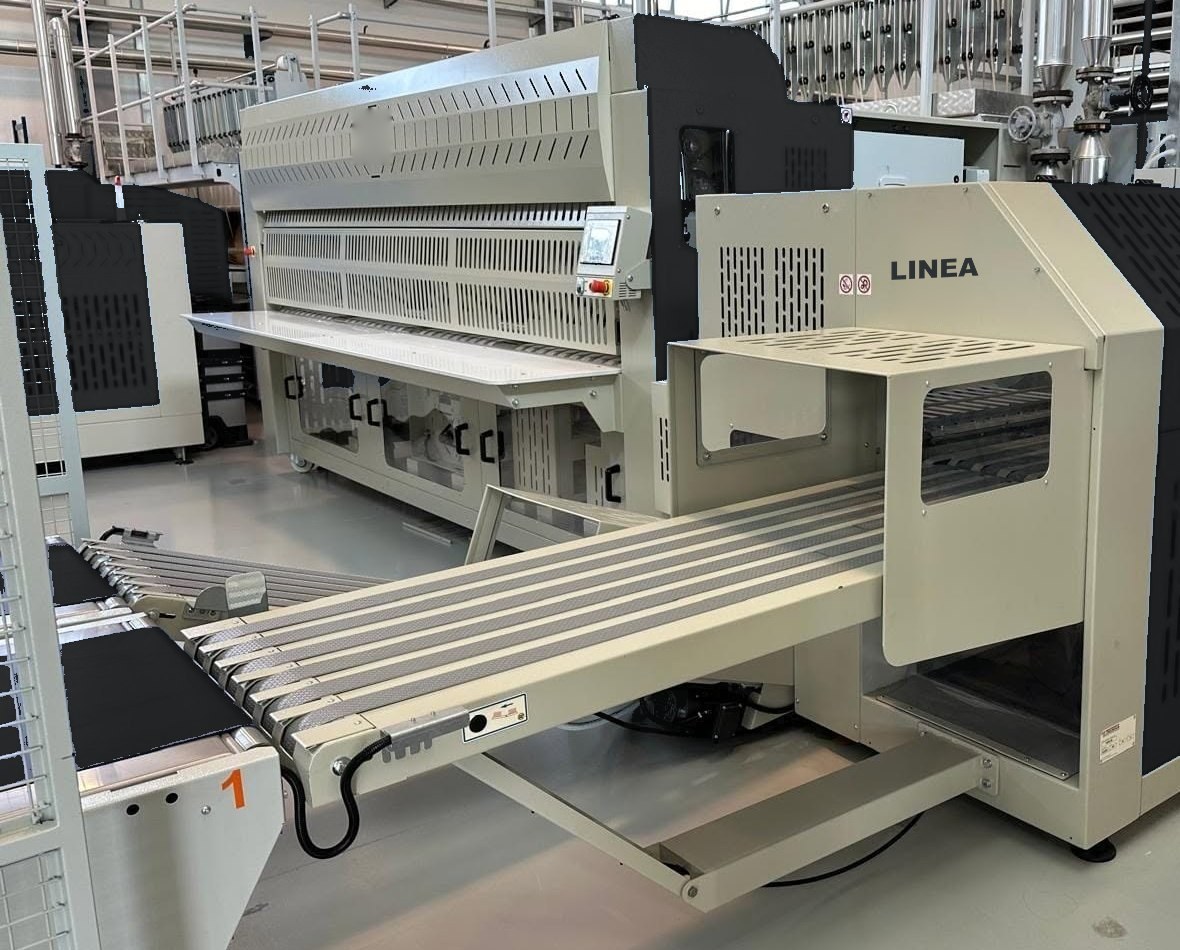
Folding and stacking machine installed in a working laundry
Folding and stacking, installed and commissioned. Machines from the factory we build with.
40 yearsbuilding laundry machinery
3 plantstwo in Tuscany, one in Veneto
Italy · Europelines in daily production
United Kingdommachines already installed here

We are the UK end of a factory that cuts its own steel, machines its own components and writes its own control software. Everything on this site is built in those three plants, not badged from a third party.

What people say about the Italian factory that builds these machines

“A very serious company, a leader in the construction of industrial laundry machines. Service and professionalism.”

PEPPONECO · Google review, Ponte Buggianese · translated from Italian

“A dynamic, capable and innovative company, with a significant history behind it.”

Massi Musella · Google review, Ponte Buggianese · translated from Italian

Capital-smart

Your old frames are better steel than anything built today.

Energy and finance have made a brand-new line a hard board paper in Britain right now. So there is a second route, and it is not the second-hand market.

We strip a machine back to nothing. What we keep is the original heavy steel frame and structure, which is very often more rigid and more thermally stable than current metal. Everything else goes: bearings, seals, belts, rollers, the whole hydraulic, pneumatic and electrical installation, rebuilt from scratch with inverter-driven motors and a modern PLC running our own software.

What comes back is a machine with the running costs and the controls of new plant, at a capital cost that a finance director will actually sign, on a frame that has already proven it can take twenty years of shifts.

KeptHeavy steel frame & structure
ReplacedBearings, seals, belts, rollers
RebuiltHydraulics, pneumatics, electrics
NewInverter motors, PLC, our software
How a rebuild works, in full →

Made in Italy, properly

Cut, machined and wired
under one roof.

The steel is cut in our own fabrication shop in Italy. The components are machined to tolerance in-house. The panels are wired in-house. The software that runs the PLC is written in-house. Nothing critical is farmed out to a supplier who has never seen a laundry floor.

That is not a romantic story about craftsmanship. It is the reason we can change a loading height, move a discharge to the other side or add a module to a tunnel without it becoming a six-month special order. And it is the reason these frames are still running two decades later.

Italyfabrication & assembly
Europemachines installed & running
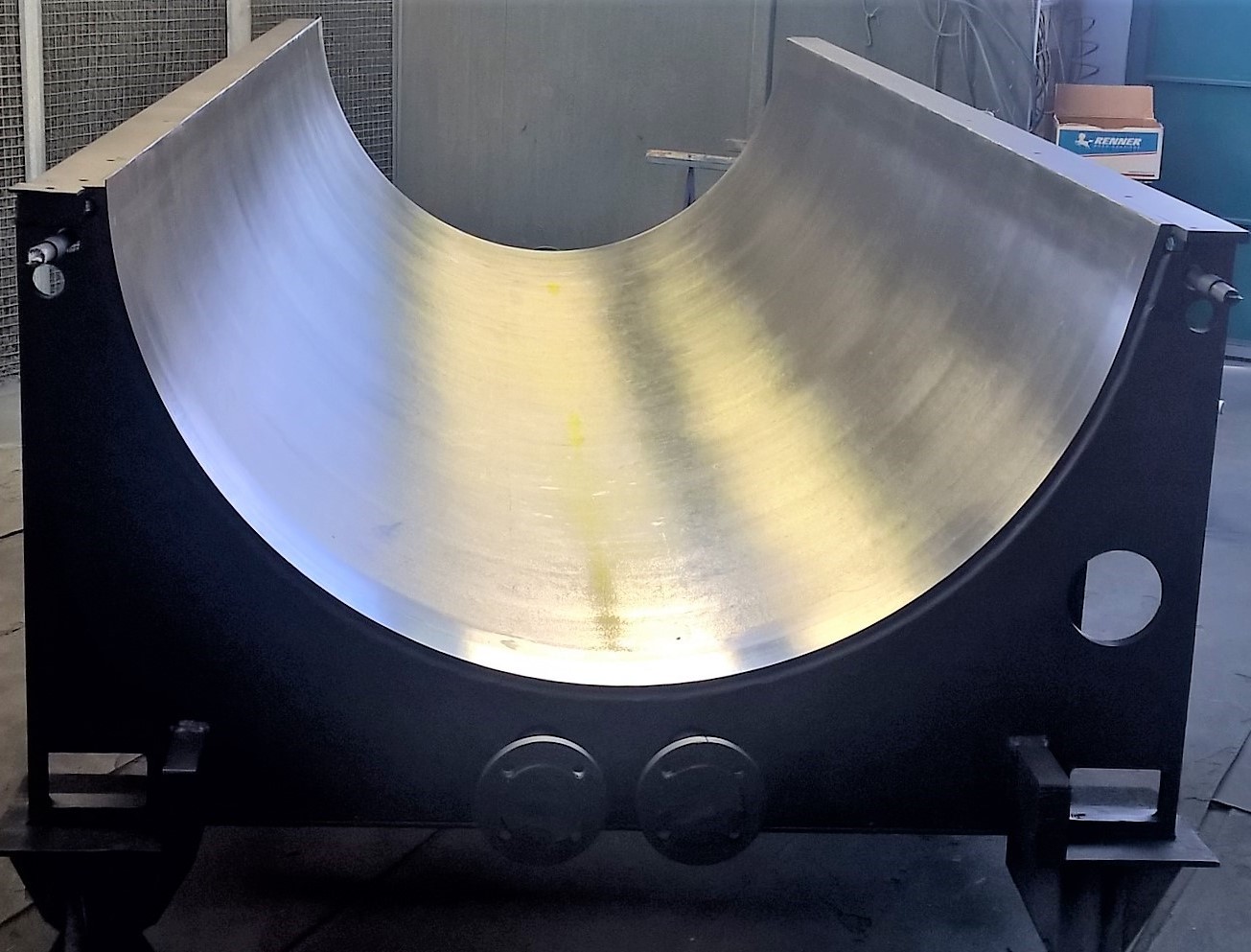
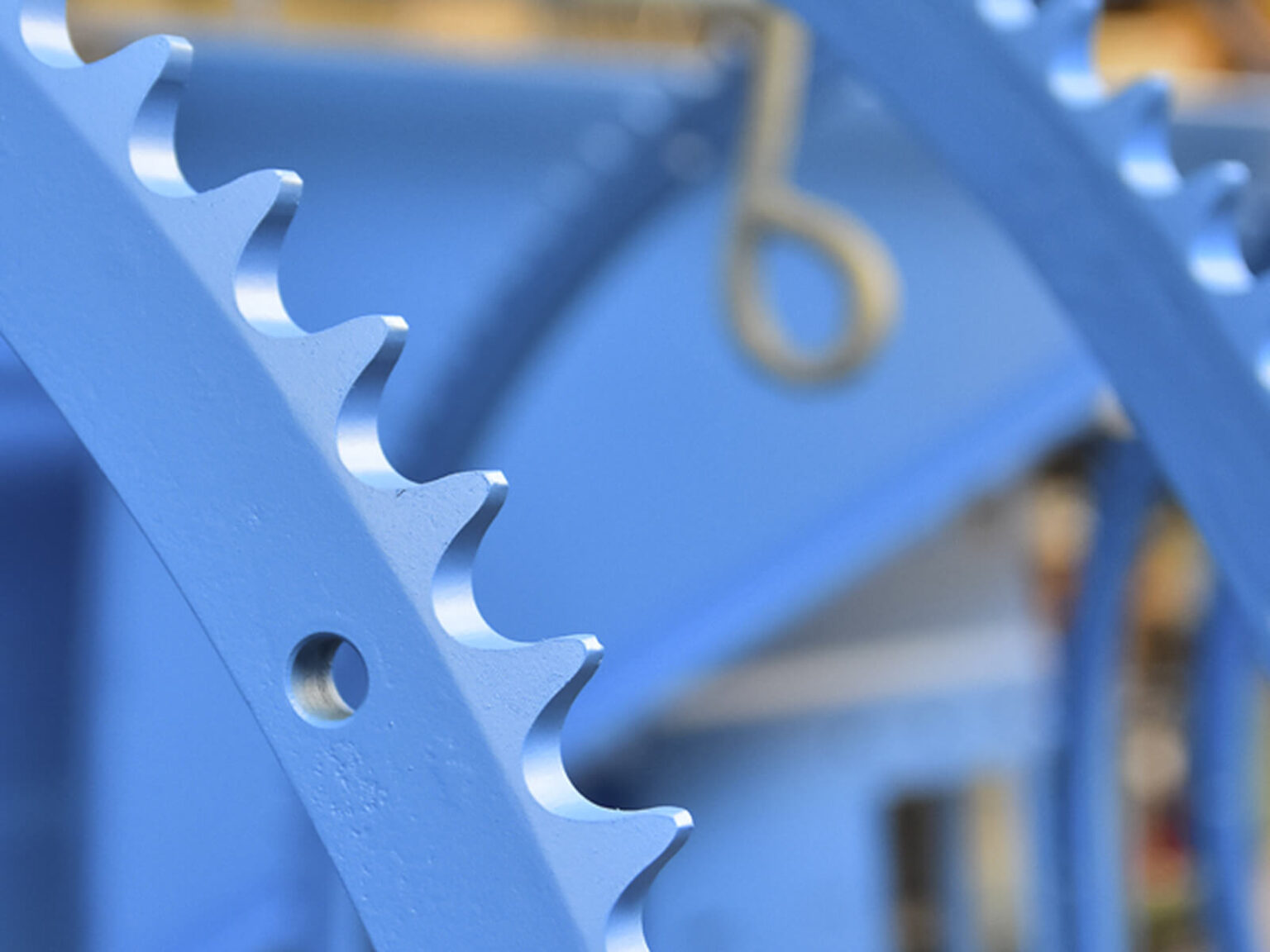
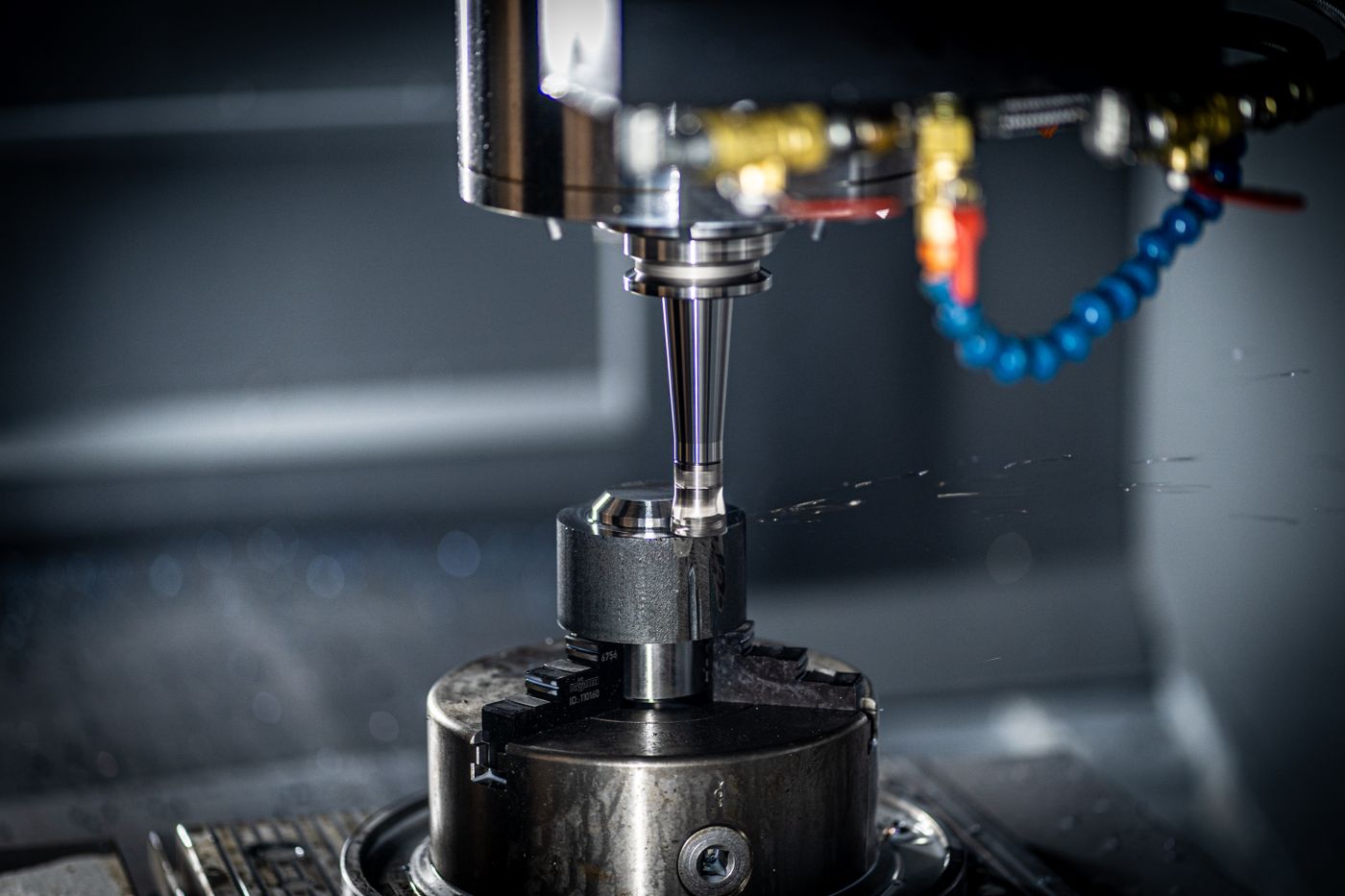
Machined component on the factory floor
Machined component, our shop floor
Precision machining
Tolerance work, where durability starts

Why buy from us

Four reasons, and one we will not pretend about

01

Built to last, on purpose

Heavy steel frames, built for decades of shifts rather than for a warranty period. It is the reason a frame from twenty years ago is often still the best part of the machine.

02

Everything made in-house

Steel cut, machines assembled, panels wired and software written under one roof in Italy, with operations across Europe. Nothing is sub-assembled by a supplier who has never seen your plant.

03

Factory-direct, not dealer-direct

You are talking to the people who build the machine, so the answer to "can it do this?" comes from engineering, not from a datasheet.

04

We look before we quote

Nobody quotes your plant from a catalogue. An engineer comes to look at the machines, at how the flow works and at the drawings, and only then do you get a figure. It is slower than sending a price list, and it is the reason the number holds.

05

Built to order, not to stock

Nothing sits in a warehouse waiting for a buyer. The machine that arrives was cut for your building, not for an average one, so there is a lead time and we tell you what it is up front.

!

What we are not

We are not a rental company with a national engineer fleet, and we will not pretend to be. If what you want is a monthly fee that makes the machine somebody else's problem, that is a legitimate choice and there are good firms selling it. We sell the machine, at a price you own outright, built to need us as rarely as possible.

How it works

From first call to running line

  1. Tell us the plant. Daily kilos, linen mix, what you run today and where it hurts: energy, labour, downtime or throughput.
  2. Site survey. An engineer comes to see the plant: how it runs today, the layout it has to fit and the drawings behind it. Nothing is quoted before that visit.
  3. Engineered proposal. Machines specified to your layout, with drawings, delivery and installation. A fixed figure, in one document.
  4. Install and support. Installed and commissioned on your floor, and supported afterwards by the people who built the machine.

Next step

Which stage is slowing you down?

Tell us what you run. We reply as soon as we can, and the technical questions go straight to the factory engineers.

Rather write? Email info@linealaundry.co.uk.

By sending this you agree to our privacy policy. No lists, no newsletters, just a reply.